ثبت اختراع 01ثبتشده
Hybrid Insulators
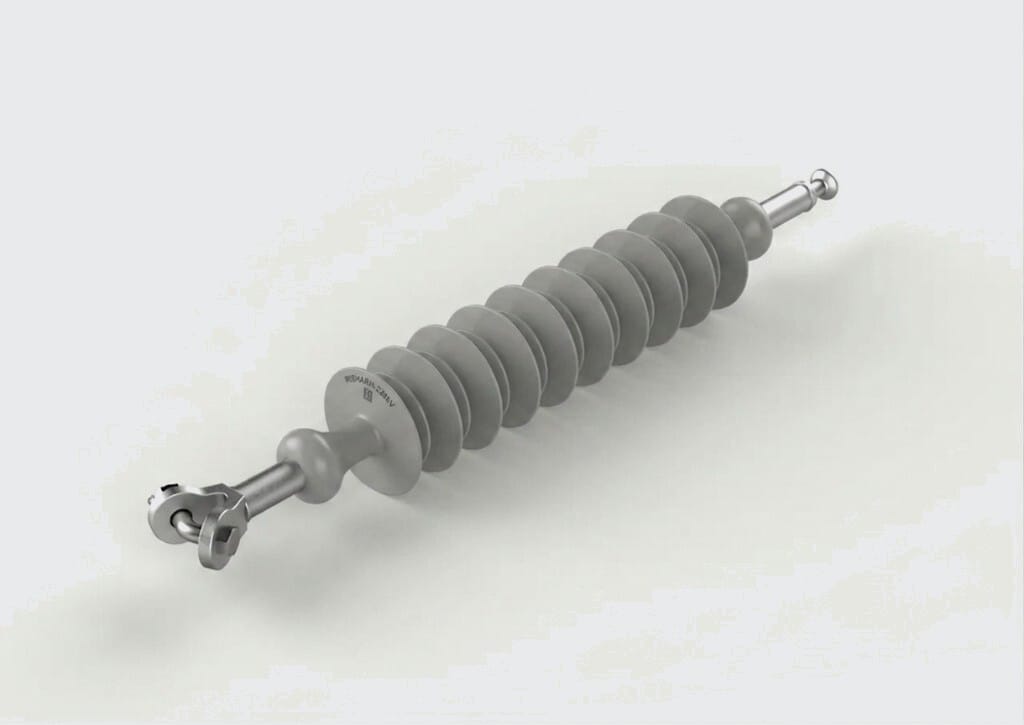
سیلیکون × چینی
ساخت کامپوزیتی ثبتشده که بدنهٔ سیلیکونی را با هستهٔ چینی یا شیشهای ترکیب میکند. مقاومت مکانیکی سرامیک با آبگریزی و خودتمیزشوندگی سیلیکون.
Loading
Blog – R&D
Taban Niroo’s Research & Development team focuses on the design and development of products that deliver additional value under demanding electrical and environmental conditions. Our work is guided by IEC standards and continuous feedback from the field.
R&D overview
Every Taban Niroo product begins as a calculation, not a guess. Our R&D team works from IEC standards, electrical field simulations, and years of accumulated field data to engineer insulators that perform reliably in the specific conditions they'll actually face — not just in laboratory ideal conditions.
This approach has driven two of our most significant engineering efforts: rigorous, standards-based shed profile design for our composite insulator range, and the development of our hybrid insulator technology — a product line we've been refining since 2009.
Pollution performance engineering
Every shed profile, calculated against IEC 60815-3
Hybrid insulator development
Taban Niroo was one of the first manufacturers to design and manufacture hybrid line post and pin-type insulators, in use since 2009. Hybrid insulators combine a porcelain core — delivering the mechanical strength, rigidity, and long-term dimensional stability porcelain is known for — with a silicone rubber housing, delivering the pollution resistance and hydrophobicity that porcelain alone cannot offer.
Conventional porcelain insulators are strong but pollution-vulnerable and prone to brittle failure. Standard composite insulators are lightweight and pollution-resistant but can't always match porcelain's mechanical rigidity under bending, torsion, and compression loads. Hybrid insulators are engineered to combine both — without the compromises of either technology alone.
Our R&D team spent more than a year developing our original hybrid line post and pin insulator design, using electrical field simulation to optimize field distribution and minimize partial discharge risk around end fittings. That work has since been extended to hybrid solid-core station post insulators — engineered for HVAC air-insulated substation applications up to 420 kV, with electrical field analysis confirming safe field distribution at the critical fitting interfaces.
Our hybrid post insulator design has passed the full range of electrical and mechanical type tests required under existing composite and porcelain post standards, along with long-term natural ageing and pollution performance testing. In Iran, hybrid insulator technology is recognized under a national standard developed by researchers at the Niroo Research Institute (NRI) — the same technical foundation reflected in the international IEC/TS 62896 standard specifically developed for hybrid insulators.
Several of our hybrid post insulator installations are in service at 420 kV AC substations across a range of environmental conditions, and continue to perform reliably without the need for regular washing — a direct result of the pollution-resistant silicone housing combined with a mechanically robust porcelain core.
In short, our hybrid insulators offer
ثبت اختراعها
Hybrid Insulators (سیلیکون × چینی)، Creepage Extenders & Covers (بازسازی در مناطق آلوده)، Hybrid Transformer Bushings (ترانسفورماتورهای MV–HV).
سیلیکون × چینی
ساخت کامپوزیتی ثبتشده که بدنهٔ سیلیکونی را با هستهٔ چینی یا شیشهای ترکیب میکند. مقاومت مکانیکی سرامیک با آبگریزی و خودتمیزشوندگی سیلیکون.
بازسازی در مناطق آلوده
چترکهای سیلیکونی قابل نصب در میدان که فاصلهٔ خزشی مقرههای چینی یا شیشهای موجود را افزایش میدهند و ریسک فلشاُور در پستهای آلوده را کم میکنند.
ترانسفورماتورهای MV–HV
بوشینگ ترانسفورماتور با محفظهٔ پلیمری و سیستم چترک سیلیکونی، طراحیشده توسط تابان نیرو برای ترانسفورماتورهای فشار متوسط و فشار قوی.
Articles & field notes
R&D notes
Technical articles on composite insulation, IEC testing, and field performance will appear here. Meanwhile, explore the product catalogue or send a project enquiry.